
The increase in trade between China and North Korea shows the need to expand economic development in cross-border areas and has nothing to do with the THAAD deployment in South Korea, Chinese experts said.
The experts were responding to foreign media reports on China's reaction to the plan of South Korea and the US.
Some South Koreans and Japanese have criticized China for reducing UN sanctions against North Korea over the THAAD deployment, as data from China's General Administration of Customs shows that total trade volume between China and North Korea in June reached $503 million, a 9 percent increase from the same period last year.
The Yonhap News Agency reported that Chinese companies resumed doing business with the North after hearing "that Seoul-Beijing relations have taken a turn for the worse over the THAAD issue."
Japan's Yomiuri Shimbun published an article on Saturday, saying China should not break international sanctions against North Korea over "self-serving reasons."
Zhang Liangui, a professor on Korean Peninsula issues at the Party School of the CPC Central Committee, told the Global Times on Thursday that China opposes South Korea's THAAD deployment as well as North Korea's nuclear program since both will affect China's security, and "China will not do any trade-offs."
China has banned coal, iron ore, gold, rare earths and several other raw mineral imports from North Korea, and selling jet fuel to North Korea is prohibited. Following the UN Security Council's resolutions, the embargo immediately took effect, China's Ministry of Commerce said in a statement on its website in April.
Lü Chao, a research fellow at the Liaoning Academy of Social Sciences, told the Global Times on Wednesday that bilateral trade is largely fueled by border trading and exports of building materials.
"The border trade has become increasingly important in Northeast China amid the economic downturn compared to the past few years. And North Korea has a greater demand for building materials from China to support a new round of urbanization in Pyongyang," Lü said.
Lü stressed that residents near the two countries' border normally trade daily necessities and foodstuff, and individual transactions reach no more than 8,000 yuan ($1,200), which do not affect UN sanctions.
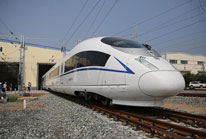 World's fastest bullet train to start operating next month
 Huangluo: China's 'long hair village'
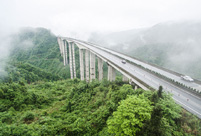 Spectacular bridge with one of the tallest piers in the world
 Magnificent view of Hukou Waterfall
 A glimpse of Stride 2016 Zhurihe B military drill
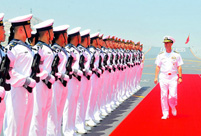 US Navy chief tours Liaoning aircraft carrier
 Chinese American woman wins Miss Michigan
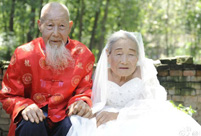 Centenarian couple takes first wedding photos
 Traditional Tibetan costumes presented during fashion show
 Top 10 livable Chinese cities
 Top 20 hottest women in the world in 2014
 Top 10 hardest languages to learn
 China’s Top 10 Unique Bridges, Highways and Roads
 Celebrity split grips nation, triggers debate on marriage
 Chinese fans of S.Korean pop culture stay loyal despite rumored ban
 Is bronze good enough for Chinese fans?
 Foreign actors in China share their experience dramatizing one-dimensional and stereotyped roles
Day|Week


